


Unity Game Development Company
Unity is the engine behind some of the world’s best games, and our team knows how to use it to fulfill your business goals. As a top Unity game development service, our 3d game developers create extraordinary games that bring millions of downloads and boost your sales with extraordinary results. We implement advanced cross-platform functionalities, advanced tech stacks, high-resolution graphics and whatever it takes to create a customized Unity game compatible with various genres and platforms.


Years in Business

Team Strength

Repeat Business

Ontime Delivery
Create Addictive Games with Our Expert Unity Developers
Businesses across the globe trust Expert App Devs for top-tier 3d game development services.
If you want to develop a Unity game that performs and profits, then Expert App Devs is your trusted partner.
With over 16 years of experience, we have helped businesses launch successful Unity games by combining industry-leading tools—Unity Pro, Visual Studio, Git, and Unity Analytics.
Our skilled developers build rich 2D/3D, AR/VR and multiplayer games that engage users and drive revenue. From concept to launch, we can build fully customized Unity games that provide full-blown digital experiences across mobile, PC, and consoles.


Scalable & Strategic Custom Unity Development Services
A custom game is more than just a product. It’s a brand experience that needs a strategic foundation, creative excellence, and expert execution.
This is why our custom Unity game development services prioritize going beyond visuals to check every box of your custom game needs. Our developers understand both gameplay dynamics and business outcomes to build games that perform in the real world.
Our expertise lies in Unity mobile development, multiplayer mechanics, 2D/3D art, AR/VR solutions, and more to serve you with the features that attract users and create long-term success.
Whether it’s your first game or your next big release, we carefully give attention to user acquisition while creating custom games to ensure loyalty and higher ROI.
Explore Our World of Unity Games
We have transformed even an ordinary idea into successful games with our creativity, platform expertise, and innovation. Check out our success stories and discover how our Unity expertise drives business results.

Why choose Expert App Devs for Unity Game Development Services?
Why Choose Expert App Devs for your Project Development
Whether you're building a next-gen mobile game or an AR/VR app with HoloLens, our Unity developers use strategic thinking and industry-spanning expertise to create the best solutions that engage users and grow your business.

Our top Unity game development company has the best Unity developers who are well-experienced with various engines and can easily implement custom game features/functionality.

We follow ethical practices and standard coding methods and keep you updated with clear communication and real-time visibility.

We focus on user-centric game designs throughout the development to make it more engaging and retain the users with a satisfactory immersive experience.

We follow an agile approach with the active participation of the client during planning, execution, evaluation, and other phases for the best outcome.

Whether it's a card, action, sports, multiplayer, or any other genre, we can create any game tailored to your audience and business needs.

We use smart strategies and our expertise according to current trends to identify the game risks early and secure the loopholes.

Deadlines matter to us, and we know you are excited to bring your Unity3D game to the world. Our Unity developers always execute with a pre-planning to manage last-minute risks and ensure a timely launch.

Our in-house team covers everything design, development, testing and support to give you complete Unity game development under one roof.
We turn Unity’s power into your success high-performance games that players love and businesses trust.

Unity game prototyping with interactive gameplay screens, immersive UI elements, and player experience design

Unity game design system featuring reusable UI components, HUD elements, and interactive game assets

Collaborative Unity game design workspace for real-time planning, creative feedback, and development coordination

Interactive Unity game UI with responsive controls, drag-and-drop mechanics, and immersive player interactions

Unity game user journey mapping with gameplay flows, player progression, and interactive touchpoints

Unity game wireframe design with gameplay layouts, menu structures, and level planning interfaces
Strategic Game Planning & Immersive UI/UX Design
As a top Unity 3D game development company, we spend enough time understanding your game concept, audience and platform goals.
We collect every technical and non-technical detail at this phase to decide the right strategy and technologies to achieve your business milestones.
Based on the requirements gathered, we brainstorm ideas and create engaging game plots, character sketches and immersive UI/UX layouts.
Using tools like Adobe XD, Sketch, or Unity’s own design frameworks, we create wireframes and prototypes to enhance the gameplay.

Agile Unity game development process with rapid iterations, continuous updates, and collaborative workflows

Unity game API integration connecting multiplayer systems, cloud services, analytics, and external platforms

Unity 3D game development environment with advanced coding tools, gameplay scripting, and software engineering

Cross-platform Unity 3D game development for mobile, PC, console, AR, and VR platforms

Full-stack Unity game development combining frontend gameplay, backend systems, and cloud infrastructure

Unity game deployment workflow with automated releases, cloud hosting, and live update management
Agile Unity Game Development & Cross-Platform Implementation
Once the prototype is prepared, it is shown to the client, and after approval, our Unity developers start implementing game logics, features, functionality, interactions and overall game mechanisms to make sure it's compatible on multiple platforms and provides a consistent, enjoyable experience.
We develop each level and functionality with perfection. Plus, we follow agile practices to deliver frequent builds and updates so you can test features early and share your feedback instantly.

Automated Unity game testing workflows ensuring gameplay stability, performance, and bug-free experiences

Unity game quality assurance and bug tracking system for issue detection, debugging, and resolution

Unity game compatibility testing across smartphones, tablets, consoles, VR headsets, and operating systems

Unity game performance analytics with FPS monitoring, gameplay tracking, and optimization insights

Unity game testing across multiple screen sizes, resolutions, and device environments

Unity game optimization and performance monitoring for faster load times and smoother gameplay
Comprehensive Game Testing & Quality Assurance
We make sure the game is how you expected, hence, we conduct multiple layers of testing unit, functional, performance, device compatibility and gameplay testing across platforms and screen sizes.
Our testers test each feature, functionality, logic, and interaction to identify any bugs, crashes, or inconsistencies in the game. We also make sure the game meets industry standards as well as user expectations before it is launched.

Real-time Unity game monitoring with player analytics, server tracking, and performance dashboards

End-to-end Unity game lifecycle management for updates, scaling, and long-term engagement

Continuous Unity game support, updates, troubleshooting, and technical maintenance services

Unity game performance enhancement services improving gameplay speed, graphics, and player retention

Unity game security with cloud backup, encrypted player data, and secure multiplayer infrastructure

Unity multiplayer server maintenance and system updates ensuring uninterrupted gaming experiences
Post-Launch Support, Analytics & Game Optimization
After launch, our team continuously monitors and refines the game by analyzing the real-time players’ data.
Based on the analytics data, our experts suggest new features or updates and optimization strategies to ensure your game remains compatible with new devices and OS versions.

Unity game business strategy consulting backed by player analytics, monetization insights, and market research

Strategic collaboration between Unity developers and clients for successful game development outcomes

Digital transformation consulting through immersive Unity AR, VR, and interactive gaming solutions

Unity game growth strategy consulting to improve player acquisition, engagement, and revenue generation

Unity game solution planning focused on scalability, immersive gameplay, and technical innovation

Unity game technology roadmap planning for scalable game development and long-term product growth
Strategic Unity Consulting & Long-Term Game Growth Support
Our Unity 3d game development services don’t end with development; it begins with meaningful collaboration.
If you are not sure where to start, we can consult you regarding your game concept, technical needs and business strategy.
We analyze your goals, refine strategies, and plan future enhancements according to your users' feedback and changing market trends.
Our expert team provides clarity and confidence if you want to scale your game or integrate new features in the future.
Our Projects Our Projects Digital Excellence Through Expert Engineering.









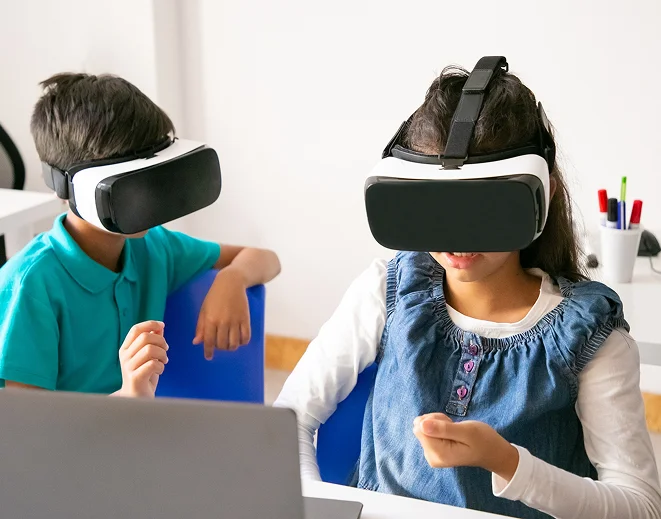
Unity Game Development Guide for Business Visionaries
Unity is one of the famous game development platforms, or you could say a cross-platform game engine, that is used to create 2D and 3D interactive experiences such as video games, simulations and much more. It is best for game development because it supports various platforms like Android, iOS, Windows, macOS, consoles and even AR/VR devices.
It supports both visual and script-based development and is widely used by game developers, independent creators, studios and even non-gaming industries like architecture, education, film and automotive.
Beginners and experienced developers both choose Unity because it uses a flexible C# scripting language and supports powerful features like real-time rendering, physics, animation and multiplayer networking.
You can make casual mobile games and complex PC/console games, to AR/VR experiences using Unity. You might be amazed that famous games like Monument Valley, Pokémon Go and Among Us are also built on Unity.
A Brief History of Unity
Unity was founded in 2004 by David Helgason, Joachim Ante, and Nicholas Francis in Denmark. Their vision was to make game development accessible to everyone. The first game developed in Unity was GooBall, which was a test case. The first version of Unity was launched in 2005, and it was only for Mac OS; later, it was also released for Windows and the web.
- In 2006, Unity was awarded for the best use of Mac OS X graphics.
- In 2007, Unity 2.0 version was released, which supports game development for iPhone.
- In 2010, the version of Unity 3.0 was released with exciting features that allowed developers to sell assets and scripts.
- In 2012, Unity 4.0 version was released, which included features like graphics rendering, animation, and physics. It supports games in Windows Phone and BlackBerry as well. This version also supports animation tools, DirectX 11, and Adobe Flash.
- In 2017, Unity 2017 was released with a more optimized performance with a rendering engine, color grading, real-time graphics, world building, live operations analytics, and more. This allows drag and drop features and a cinematic experience in the games.
- In 2018, Unity 2018 also added machine learning tools, a lightweight Rendering Pipeline, and improved visual effects.
- In 2025, Unity 5.0 was released with improved lighting and audio. This version includes real-time global illumination, light mapping previews, Unity Cloud, a new audio system, and much more. Unity 5.0 is more about advanced features and subscription models that allow us to build and deploy games.
It kept on upgrading every year, and by 2020, 50% of games were built on Unity. Plus, it also introduced MARS, which is a mixed augmented reality service. The latest version was released in October 2024 with generative AI functionalities.
Unity Engine: Core Features & Capabilities
Below are some of the core features and capabilities of the Unity game engine.
#1. Real-time 2D & 3D rendering
It has a powerful graphics engine that supports lighting, shadows, physics, and animation, which allows developers to create 2D/3D and visually rich gaming environments across various genres.
#2. Cross-platform development (25+ platforms)
Unity allows to develop games across more than 25 platforms, including iOS, Android, Windows, macOS, consoles, and web. Means you can build once and deploy everywhere. This also reduces the development time and helps to reach wider audiences without rewriting the code for each platform.
#3. AR/VR support
It provides an XR toolkit that supports AR/VR and is compatible with many devices like Oculus, HoloLens, Magic Leap, and ARKit/ARCore. Hence, Unity is also very helpful in making games and apps for training, education, and enterprise applications.
#4. Asset Store & plugins
Unity’s Asset Store has thousands of ready-to-use assets, tools, and plugins, including characters, environments, sound effects and development tools. This makes development faster and allows us to add desired functionality without writing code from scratch.
#5. Unity Editor and C# scripting
Unity editor and C# scripting allow developers to control game logic, user interaction and system behavior, and customize the game according to concept and needs. It also helps in scene creation, animation and debugging.
Pros of Using Unity for Game Development
- Faster development time: The interactive games can be quickly made due to its pre-built assets and real-time editing tools, as well as its visual editor, drag-and-drop features, and integrated testing tools, which make game development quicker and easier.
- Cost-effectiveness for startups and enterprises: It has flexible pricing models that include a free version for businesses or small businesses, and startups. Even paid plans are affordable compared to other engines. Hence, developers and businesses can easily create interactive, high-performance games without spending on custom tools.
- Cross-platform publishing: Unity allows to create games on 25 platforms. That means you can easily create games for Android, iOS, Windows, console, and more, and reach a wider audience.
- Active developer community and extensive documentation: Unity has a large, supportive community of developers who share tutorials, forums, and tips on a regular basis. They update the official documentation on a regular basis and are beginner-friendly. This helps to solve unity issues quickly, learn new skills, and stay updated with the latest features.
- Scalable for small to AAA games: Its flexible architecture and wide range of tools are suitable for indie developers and large studios to create high-budget AAA games.
Cons & Challenges
- Licensing costs for Pro features: The basic version is free, but if you want access to advanced features and have custom branding needs, you might need the Pro license version of Unity.
- Performance optimization for high-end graphics: Unity offers high-end visuals, but to achieve high-end graphics, developers must be skilled in using optimized shaders, lighting, and assets manually.
- Learning curve for beginners in C#: Unity uses C# as its primary programming language. Beginners without a coding background might struggle to use Unity.
Unity vs. Other Game Engines
| Feature | Unity | Unreal Engine | Godot |
| Ease of use | Beginner-friendly | Steeper learning curve | Very beginner-friendly |
| Programming Language | C# | C++ & Blueprints (Visual Scripting) | GDScript, C#, C++ |
| Graphics Quality | Excellent (suitable for 2D/3D) | High-end, AAA-quality visuals | Good, improving over time |
| 2D Game Support | Strong | Basic | Excellent |
| Cross-platform Support | 25+ platforms | 15+ platforms | 20+ platforms |
| AR/VR Support | Robust XR support | Strong VR support | Basic, in development |
| Asset Store/Marketplace | Extensive Unity Asset Store | Unreal Marketplace | Smaller asset library |
| Licensing/Cost | Free + paid plans based on revenue | Free up to $1M revenue, then royalties | Completely free & open-source |
| Community support | Large and active community | Strong community | Growing community |
Industries Benefiting from Unity Development
- Gaming: Unity is the foundation of the gaming industry, especially for indie creators and large studios. Its powerful engine, asset store, and cross-platform support help to create unique and highly engaging 2D/3D multi-player games.
- EdTech: It is used to make interactive apps, virtual classrooms, and gamified lessons to help students understand complex topics better. Especially in subjects like science, maths, and history, it makes learning more enjoyable and easier to understand.
- Real Estate & Architecture (3D visualization): Real estate professionals can create 3D walkthroughs and virtual tours of properties to allow clients to explore buildings and properties before they’re built. It provides a more realistic experience if customers are walking on the property, and builders can make changes according to feedback.
- Healthcare: Unity is used in healthcare to build training simulations, patient education tools, and therapy games. Doctors and students can practice procedures in a safe virtual environment. It’s also helping with mental health apps and rehab programs, offering immersive ways to support physical and emotional well-being.
- Automotive: Unity is useful in creating virtual prototypes and mockups to speed up changes and reduce development costs. You can offer real-time customization to users to allow them to visualize the vehicles online. Virtual space can be useful to train employees in the automobile industry.
- Marketing & Brand Gamification: It is useful to create interactive ads, branded games, and AR experiences that grab attention. Adding rewards, challenges, or virtual product demos helps users easily remember the game's color, name, and concept. This helps to boost brand recall, audience engagement, and customer loyalty.
Future of Unity Game Development
Unity game development is evolving through advances in real-time graphics, artificial intelligence, cross-platform publishing, and connected gaming experiences. Unity's development roadmap places a strong focus on improving the Universal Render Pipeline (URP), rendering performance, build times, and support for a wider range of platforms. These developments give game studios more options for building engaging games while balancing visual quality, performance, and production costs.
1. AI-Powered Gameplay and Game Content
Artificial intelligence can help developers create more responsive non-player characters (NPCs), adaptive gameplay systems, smarter opponents, and personalized player experiences. Machine learning can also support features such as object recognition, natural language processing, and real-time predictions when these capabilities suit the game.
Unity's Sentis technology, now documented under Unity's AI inference tooling, allows developers to run supported trained machine learning models within Unity applications. The practical results depend on the model, target device, and implementation. AI can support game development, but it still requires testing, design oversight, and performance optimization.
2. Cross-Platform Games and Performance Optimization
Players expect games to deliver a consistent experience across mobile devices, PCs, consoles, and other supported platforms. Unity helps developers share code and game systems across multiple targets, reducing duplicated development work where the project architecture allows it.
The Universal Render Pipeline (URP) can help teams tune graphics performance for different hardware, including lower-powered devices and handheld gaming PCs. Developers still need platform-specific profiling, memory management, input adjustments, and quality settings to achieve reliable performance. Cross-platform availability and multiplayer cross-play also depend on the platforms, integrations, and game architecture selected.
3. Cloud-Connected Gaming and Live Operations
Cloud infrastructure and online game services make it possible to support multiplayer experiences, player data, live events, progression systems, and updates after launch. Unity Gaming Services offers tools for selected needs, including multiplayer, cloud-based game logic, player data, and build automation.
Cloud gaming is another area of development. It allows supported games to be streamed from remote infrastructure to compatible devices, potentially reducing local hardware requirements and eliminating the need for a traditional local installation. However, streaming requires a suitable cloud gaming platform, infrastructure, and network connection; it is not an automatic feature of every Unity game.
4. Faster Development with Modern Unity Tools
Unity continues to improve its development environment, rendering workflows, asset management, and build automation capabilities. These tools can help teams prototype ideas, manage assets, collaborate on projects, and test builds more efficiently.
AI-assisted workflows can also support concept exploration, content production, and selected development tasks. Their usefulness depends on the project, the tools selected, and the team's review process. Developers must still check generated content and code for quality, licensing concerns, compatibility, security, and performance before release.
5. Continued Opportunities in Mobile and Indie Game Development
Unity remains a practical option for many mobile games, indie projects, and smaller development teams because it supports multiple platforms and offers a broad development ecosystem. Teams can use reusable assets, shared code, and established workflows to build prototypes and take products toward release.
The right approach depends on the game's visual requirements, target devices, team experience, monetization model, and long-term support needs. Careful scope planning, performance testing, and platform-specific quality assurance remain essential, even for small projects.
6. Better Multiplayer Experiences, Analytics, and Post-Launch Support
Modern games often need more than a successful launch. Multiplayer features, player analytics, crash monitoring, live events, content updates, and community feedback can help development teams understand how a game performs after release.
By planning these capabilities early, studios can make informed improvements, address technical issues, and deliver updates without unnecessarily disrupting the player experience. The tools and services should be selected according to the game's scale, privacy requirements, budget, and operational needs.
From where can I learn Unity?
- You can easily learn Unity from the unity learn website, which offers a lot of resources such as tutorials, documentation, and courses.
- You can also take courses from various reputable websites like Coursera and Udemy or watch YouTube videos. Additionally, also check out websites like freeCodeCamp and Codecademy, which provide free resources.
- You can also join Unity Certified courses or game development boot camps. You can also join Unity forums and communities on Reddit or Discord.
- If you are from a technical background, you can easily learn from the websites and resources available on the internet.
Questions You May Have
Get in touch with our experts
As an experienced Unity game development company, we have hands-on expertise in developing games across various genres, like hyper-casual, strategy, multiplayer, action, MMORPG, educational, simulation, and AR/VR experiences using the Unity game engine. Our Unity developers can create customized games according to the tailored gameplay, visuals, and mechanics to suit your gaming expectations.
Unity is the best game development platform among all that is used for most of businesses. It supports amazing 2D/3D graphics and animations, which makes it suitable for real-time gameplay. Plus, it has strong community support to solve the issues and adapt the game accordingly.
The cost of Unity game development can range from $35,000 to $200,000 or more. The cost can go up and down according to the game’s complexity, genre, features, and platforms. Get a free consultation from us if you want to know an exact estimate of the Unity game project.
Yes, we can guide you on game ideation and concept creation with our experience and knowledge. Whether you are just starting out or have a rough idea about the game, we brainstorm the core concept, define gameplay mechanics, sketch out user journeys, and create a winning strategy to create a highly addictive game.
Yes, you can hire our Unity developers to extend your in-house team by choosing part-time, full-time, dedicated, or project-based models. If you have any customized requirements or want Unity developers on an hourly basis, speak with us, and we can adjust the engagement model to fit your project execution.
Yes, we believe in professionalism and transparency for hassle-free execution. Once the project is completed and payment terms are fulfilled, you will have full ownership of your Unity game, including its source code, assets, and intellectual property. Our experts also guide you on how to manage the code securely in the future and handle minor upgrades without hassle.
Yes, we have experienced strategists and consultants in the team who can guide you on implementing the right monetization model according to the trend and your game.
From ads and in-app purchases to subscriptions and premium versions, we guide you on monetization features that boost engagement and drive long-term revenue.
Yes, we can migrate or port your existing game to Unity. If your game is built on Unity, it can be easily opened by opening the code in Unity Editor, and if it's built using a different game engine, this needs rewriting and updating the code, and importing certain game assets.